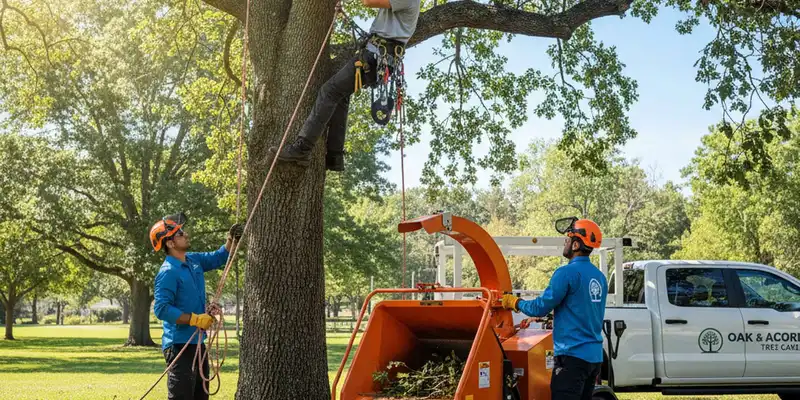
Federal Way’s neighborhoods include everything from older single-family homes near Steel Lake to newer developments along Pacific Highway South. Many properties are shaded by Douglas firs, red alders, and big-leaf maples, which can make access difficult and increase the pressure from fungal disease in a damp climate. The tree care professionals in Tacoma within this network know how to manage crowded canopies, reduce root conflicts near driveways and foundations, and support tree health on properties that need to stay safe and easy to access through wet, windy seasons.
That’s why so many property owners in Federal Way, WA, turn to Arbor Tree Care for year-round maintenance.

Prefer to Talk to An Expert?
(253) 242-6545
Why Federal Way Property Owners Rely on Local Experts
Local crews understand the area’s thick conifer cover, sloped terrain, and moisture-related disease patterns. That local knowledge shapes every job, from equipment selection to pruning methods, so work can be completed safely and appropriately for Federal Way properties.
Whether the project is large Douglas fir removal along South 320th Street or careful crown thinning near Twin Lakes, the goal is the same: keep trees manageable, healthy, and suited to the site.
If you care about the condition of your property, local contractors can help protect its safety, structure, and long-term health.
Our Tree-Service Services
in Tacoma, WA, Include
Tree Care Services Matched to Your Federal Way Neighborhood
Different lot sizes, access points, and grades call for tree work that is planned around each property instead of forced into a standard approach. That is why local professionals tailor their methods to slopes, drainage paths, and canopy conditions throughout the area.
Whether the work is needed on a lakefront home in Steel Lake, a tightly packed parcel in Dash Point, or a commercial property near the Commons at Federal Way, the service plan is adjusted to fit the site.
From tree trimming and stump removal to tree disease treatments and root protection, every service is shaped around the character of the neighborhood and the needs of the property.
Federal Way’s Urban Forest, Shaped by Decades of Growth
Federal Way expanded quickly during the mid-to-late twentieth century, as homes and businesses spread from the Pacific Highway corridor into wooded hillside areas. That growth left behind mature conifers, aging root systems, and dense canopy cover that still influence how tree care has to be handled today.
Aging Conifers and Tree Stability Concerns
In neighborhoods such as Lakeland and Adelaide, many properties are surrounded by Douglas firs and western red cedars that have outgrown their original planting spaces. As canopies spread and weight shifts, trees can become less stable and more vulnerable to windthrow during fall and winter storms.
Local professionals address these risks with crown reduction, hazard limb removal, and cabling evaluations that help reduce damage and preserve access.
Moisture, Fungal Pressure, and Canopy Decline
Federal Way’s marine moisture and seasonal rainfall help keep landscapes green, but they also create conditions where fungal problems can spread quickly. Root rot, needle cast, and cytospora canker may lead to branch dieback and gradual decline across multiple trees on the same property.
Professionals respond with targeted tree disease treatments, pruning that improves airflow, and soil-level disease control designed for a moisture-heavy environment.
Roots Affecting Driveways and Foundations
Over time, expanding root systems can push into driveways, sidewalks, and foundation edges, creating uneven surfaces and structural concerns around homes.
Trusted crews manage these issues with root protection barriers, selective root pruning, and careful excavation that helps protect both pavement and nearby structures.
Wind Damage and Fallen Tree Hazards
Because Federal Way sits between Puget Sound and the Cascade foothills, strong southwest winds and heavy rain can bring down limbs or entire trees with little warning. That can block driveways, damage structures, and interrupt access on both residential and commercial properties.
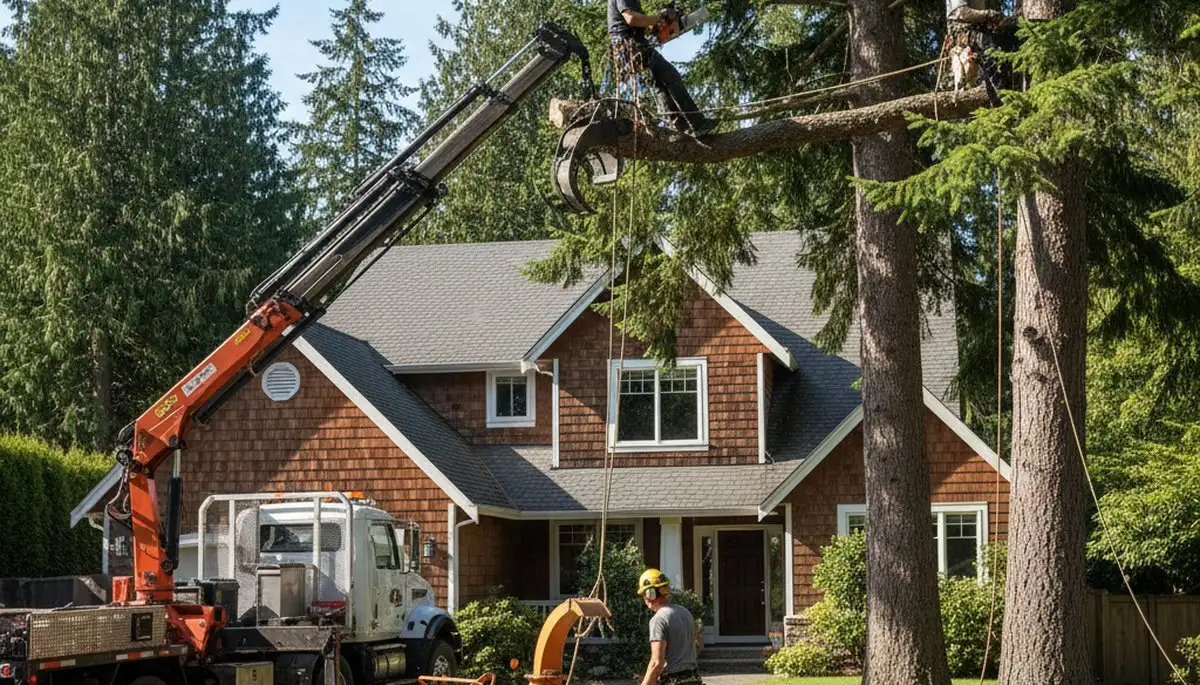
Experienced crews use storm damage response methods with aerial lifts, rigging systems, and controlled sectional removal to restore access safely after a storm.
Tight Lot Access and Equipment Limits
Many Federal Way properties have narrow side yards and fence-lined boundaries, which makes staging equipment and removing trees more complicated without causing damage.
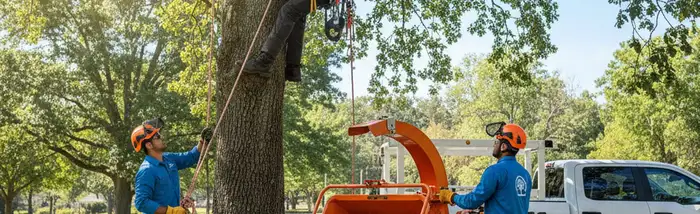
Local professionals rely on compact lifts and hand-climbing rigging systems, along with controlled lowering and debris containment, to complete work cleanly in confined spaces.

Kick off your tree service project today!
Tree Services in Federal Way, WA: Support for Every Season
From regular canopy maintenance to urgent storm cleanup, local professionals help keep Federal Way properties healthy, accessible, and protected throughout the year:
Routine Tree Trimming and Pruning in Federal Way, WA
- Crown thinning for mature Douglas firs near Steel Lake: Opening up dense interior growth improves airflow and helps reduce fungal pressure in moisture-prone areas around lakefront properties. Each tree is inspected for structure before competing or crossing limbs are removed. Reliable professional tree pruning keeps the canopy balanced without unnecessary cutting.
- Canopy clearance along South 320th Street commercial corridors: Branches that hang over parking areas and walkways are cut back to maintain visibility and lower the risk of falling limbs during windy weather.
- Seasonal tree trimming for Twin Lakes residential properties: Regular trimming helps red alders and big-leaf maples stay clear of roofs and gutters, especially before Federal Way’s wet fall and winter months.
- Structural pruning for young trees in newer developments near Pacific Highway South: Early pruning helps guide growth while trees are still developing, reducing the need for costly corrective work later.
- Vista pruning near Dash Point State Park corridors: Homes bordering natural areas can benefit from selective limb removal that preserves views while keeping the buffer between private property and parkland intact.
Plan seasonal trimming before Federal Way’s fall storm season begins so canopy weight is balanced and wind-related damage is less likely during the wet months.
Tree Removal Services in Federal Way, WA
- Hazardous conifer removal in the Lakeland neighborhood: Douglas firs that lean or show root damage near structures are evaluated and removed with controlled sectional felling to help avoid damage to fences, roofs, and utility lines.
- Dead tree removal from storm-impacted lots: After high winds, standing dead trees are addressed quickly so they do not become an additional hazard during the next weather system.
- Tree removal near utility easements along 21st Avenue SW: Trees growing into overhead utility corridors require coordinated removal that accounts for line clearance and right-of-way rules.
- Large red alder removal from saturated slope lots: Alders on wet hillside properties can fail at the roots, so removing them before the rainy season helps reduce the chance of uncontrolled fall onto structures below.
- Post-construction tree removal for new development sites: Clearing trees from development parcels takes careful staging to protect soil conditions and maintain access for nearby properties.
Removing compromised trees in time helps lower storm-season risk and keeps Federal Way properties safer and more accessible all year.
Stump Grinding and Cleanup in Federal Way, WA
- Stump grinding after conifer removal in residential yards: Stumps left behind after Douglas fir or western red cedar removal are ground below grade to limit regrowth and remove trip hazards from lawn areas.
- Stump removal near driveways and foundation edges: Stumps close to hardscape are handled with attention to depth and nearby surfaces so concrete and pavers are not damaged.
- Debris cleanup and chip removal following large-scale canopy work: After major pruning or removal, full haul-out keeps properties neat and usable instead of leaving piles of material to break down on the lawn.
- Stump treatment for invasive species control: Some stump species, including invasive Scots elm and cherry laurel, are treated after grinding to reduce the chance of resprouting.
- Multi-stump grinding for lot clearing projects near the Commons at Federal Way: Commercial and mixed-use sites that are being redesigned can use efficient multi-stump grinding to prepare for new planting or hardscape work.
Stump removal is an important step before tree planting or landscape redesign, because it opens soil space and helps new plants avoid competition from old root systems. Nearby communities, including those looking for tree removal contractors in Puyallup, WA, often face similar post-storm stump issues.
Emergency Tree Services in Federal Way, WA
- 24-hour fallen tree response for storm-impacted properties: When wind brings trees down across driveways, roofs, or access roads, emergency crews move quickly to clear the hazard and restore access.
- Emergency limb removal after wind events near Dash Point Road: Partially broken limbs are removed under controlled conditions before the next wind event can make the failure worse.
- Emergency tree services for utility line contact situations: Trees or limbs touching power lines require a coordinated response that puts electrical safety first.
- Post-storm canopy assessment for structurally compromised trees: After wind or snow load, professionals inspect trees with lean, bark splits, or exposed root plates to decide whether stabilization or removal is needed.
- Rapid debris clearing for blocked access routes in the Adelaide and Twin Lakes neighborhoods: When fallen trees block streets or driveways, emergency cleanup focuses on restoring access for residents and emergency vehicles. Properties across the South Sound, including those needing emergency tree services in University Place, WA, face similar urgent needs after major storms.
Storm season in Federal Way calls for a plan. Having local professionals available around the clock means properties can be cleared and secured before more weather causes additional damage.